
UX and UI for Nationale‑Nederlanden’s Suite of PreSales Apps
Summary
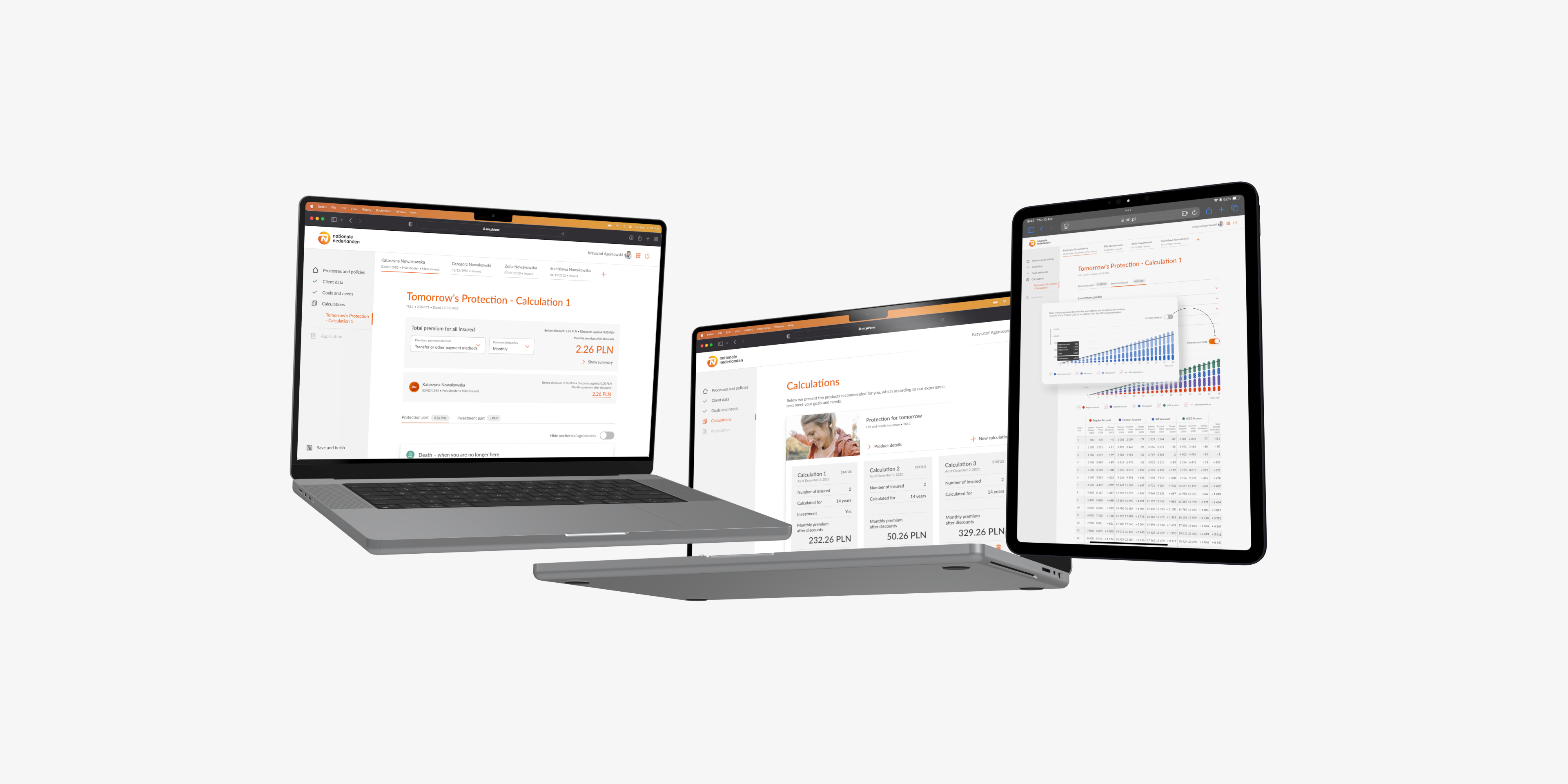
UX/UI design for two enterprise applications developed for Nationale-Nederlanden: a regulated sales platform ("One") compliant with Polish Financial Supervision Authority (KNF) requirements, and a structured needs-analysis tool supporting advisory conversations with prospects. Delivered over a 3.5-year collaboration within the client's existing design system, contributing new UI components while maintaining system integrity. The work focused on clarity in regulated sales flows, structured information hierarchy, and decision transparency in financial product distribution.
Table of contents
Team at the Project:

Milena
UX/UI

Sergiusz
UI/UX

Łukasz
UI/Graphics

Piotr
UX Lead
Time Spent: 3.5 years
1. About the Client
Nationale-Nederlanden (nn.pl) Towarzystwo Ubezpieczeń na Życie S.A. has been a cornerstone of the Polish life insurance market since 1994. Today, it serves over 500,000 clients with a wide portfolio of insurance solutions. Alongside it operates Nationale-Nederlanden Usługi Finansowe Sp. z o.o., a financial services company established in 2018, which reported a 57.6% increase in revenue and a 71.75% growth in total assets in 2023 alone—marking its accelerating influence in the local financial services landscape.
The Polish branch stands out within the broader NN Group, which operates across 11 countries and serves nearly 19 million customers worldwide. Notably, it manages Poland’s largest pension fund, with assets exceeding 50 billion PLN, and maintains a strong sales network of over 2,000 financial representatives.
Innovative at its core, the Polish operations have pioneered the integration of mental health support into insurance products—underscoring Nationale-Nederlanden’s growing role in offering holistic, customer-first financial protection in Poland.
2. Our Role
We have been contracted as a vendor agency to help Nationale-Nederlanden with the UX and UI Design of their Omnichannel PreSales App called "One". Nationale-Nederlanden has already had a working PreSales App (called "OSP") designed and developed around 2010/2012 that they wanted us to:
- Improve its overall UX and UI,
- Utilise their Work-In-Progress Design System within the App,
- Participate is improving their Design System.
The Team at TeddyGraphics comprised of 2 UX/UI Designers (Milena and Sergiusz) led by UX Lead (Piotr) has been working together (100% onsite) simultaneously on different areas of the app, to ensure faster delivery. We have also participated in the UX Tests of the app conducted by UX Researchers from NN.
We have been reporting to the Client about our work regularly, on weekly meetings.
3. UX/UI for “One” — the Omnichannel Pre-Sale WebApp
Our main point of referrence was the existing Pre-Sale WebApp “OSP” (a quick Old vs. New video-haul below). As part of the bigger, omnichannel efforts of Nationale-Nederlanden, our role was to design a consistent experience, using NN’s Design System, but having couple significant improvements in the following layers of experience:
-
"Shared" User Experience.
The app was designed for both:- Consultant leading on the prospecting meeting
- Prospect actively participating in fulfilling the app's requirements and following-along with the edits made by the Consultant
-
Prospects can get plural
- the Prospects may want to get insurance only for themselves
- the Prospects may want to get insurance for up to 12 people
-
Multi-Meeting Session
Prospecting can turn into multiple sessions/meetings -
Polish Financial Supervision Authority
We’ve had to devide the entire rpocess into small chunks, easily understandable by any kind of Prospect. - Complete Redesign of the old version using NN’s Design System
A 15-sec teaser
A quick Old vs. New video-haul
a) Navigation
One of the requirements in the Project was to:
- Allow the Users to easily jump between steps in the process
- Allow the Users to easily jump between individual insured persons who have already been added to the process
Below is how the designed SideNav (for steps in the process) cooworks with the Tabs (for insured persons).
b) Helping Prospects Define Their Goals
Identifying goals is a critical step in the early stages of the PreSales process. It creates a clear reference point for meaningful conversations between consultants and prospects, ensuring that recommendations are aligned with real customer needs—not assumptions.
This alignment is more than just a sales enabler. It’s a regulatory requirement. Under the guidelines of the KNF (Komisja Nadzoru Finansowego – the Polish Financial Supervision Authority), insurers must ensure that clients’ individual goals are respected and not influenced—reinforcing the importance of goal discovery in every advisory flow.
Our UX supports this by guiding users through a structured goal selection experience, covering:
- Basic Protection (e.g., life insurance, loan security)
- Comprehensive Protection (e.g., critical illness, disability)
- Protection with Investment (e.g., long-term savings, child’s future, retirement)
👇 See it in action in the video below.
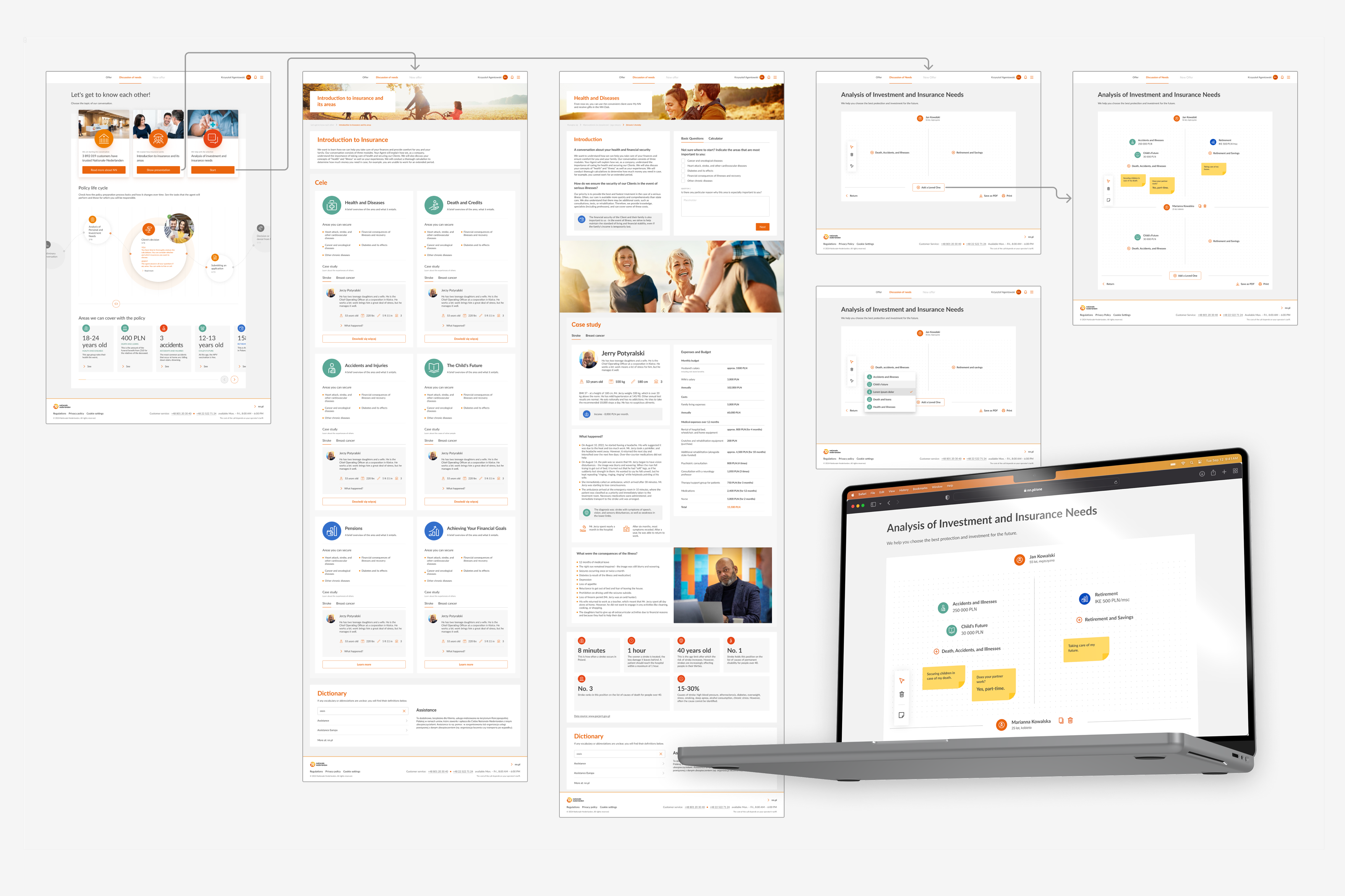
c) Needs-Analysis Interactive WebApp
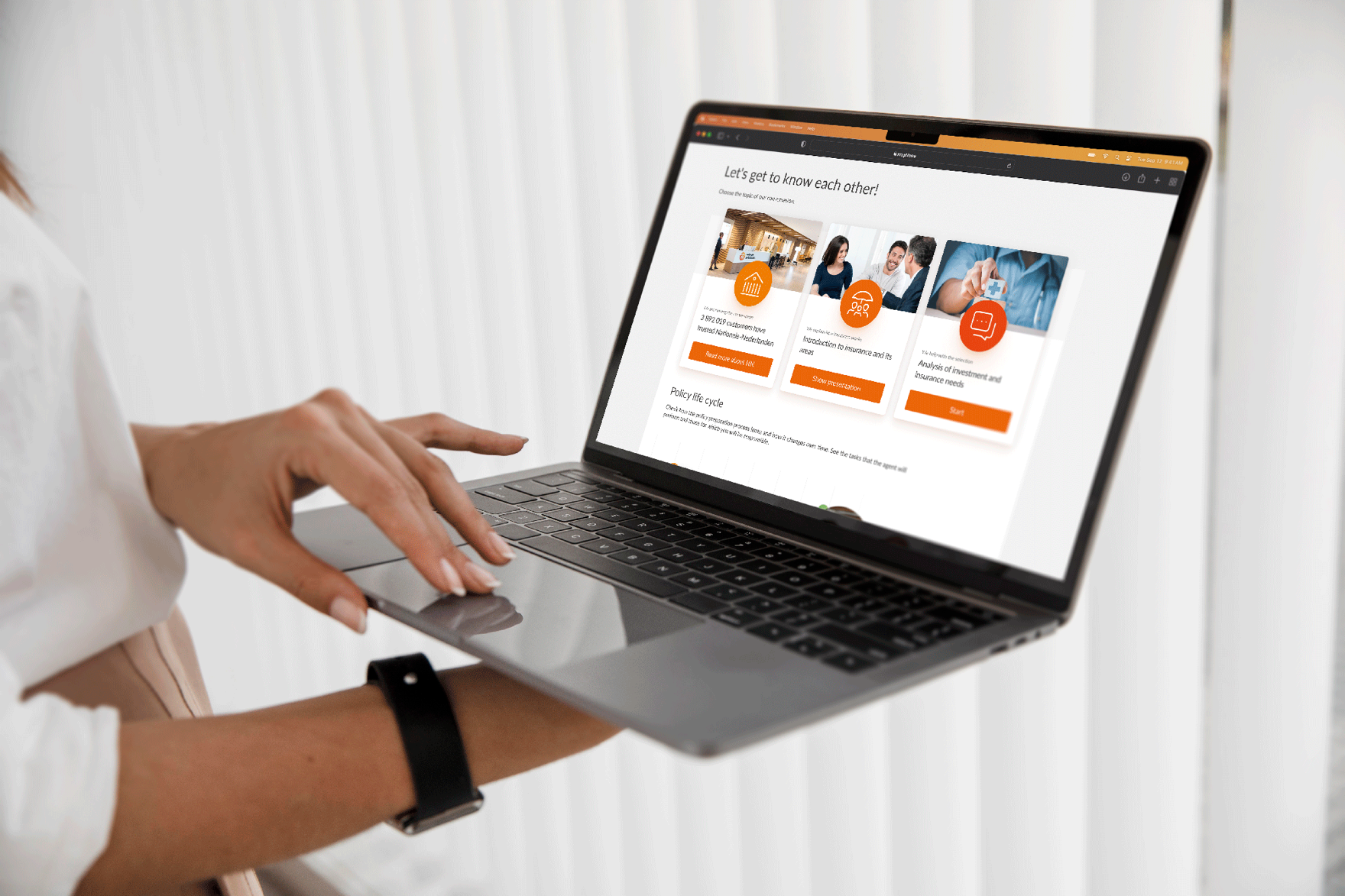
To help Consultant even better understand Prospects expecations and to help them even clearly identify their needs, together with the Product Team at Nationale-Nederlanden, we have designed an interactive WebApp that is to talk about Prospects Needs before going down the formal PreSales Process.
4. Is the Client happy?

Anna Łukasiak-Mrozowska / Nationale-Nederlanden
[Translated from Polish]
Communication was excellent – constant contact by email, phone, and Teams meetings allowed for quick and timely resolution of all business complexities and their clear translation into mockups.
Timeliness – the regularity of meetings, a proper work schedule, as well as task prioritization, and finally the delivery of approved mockups ensured reliable adherence to deadlines.
The quality of the mockups was very good, fully aligned with business expectations.